The library
Resources for every stage.
Start here, keep building, or go to the frontier. Every recommendation includes a plain-English summary before you decide to open it.
Or just come to a sessionFind the right place to begin
Start with the essentials, browse the complete library, or go straight to the frontier material.
Start here
For understanding the idea, choosing one tool, and making something for the first time.
The full library
Tools, free courses, deeper learning, agents, skills, articles, and other places to learn in Oslo.
Frontier
Notes, research, and guest lectures about the people and systems shaping modern AI.
Start here
3What vibe coding actually means, from the people who named it.
Andrej Karpathy
The original “vibe coding” note
In early 2025, the AI researcher Andrej Karpathy fired off a short post describing a new way to write software: let the model do almost all the work and just go with the flow. The phrase he used, "vibe coding," caught on fast.
Read moreSimon Willison
Not all AI-assisted programming is vibe coding
Soon after the phrase took off, the developer and writer Simon Willison stepped in to clear up a growing confusion: using AI to help you code is not the same thing as vibe coding. He wanted to keep the two ideas separate.
Read more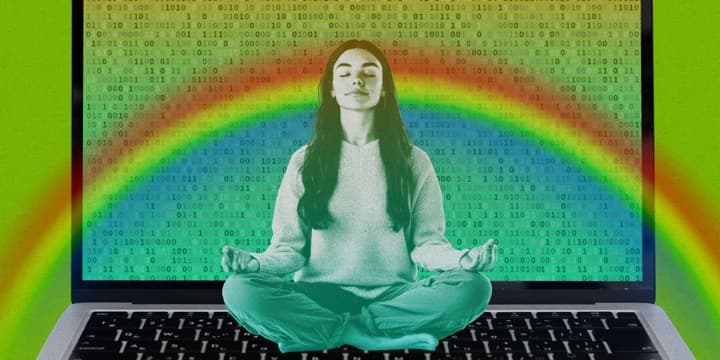
MIT Technology Review
What is vibe coding, exactly?
As the phrase spread far beyond programmers, MIT Technology Review published a 2025 explainer to answer the obvious question for a general audience: what does "vibe coding" actually mean, and where did it come from.
Read moreThe tools we use
6You only need one to start. Pick whatever gets you building tonight.
 Paid
PaidAnthropic
Claude Code
Claude Code is an AI helper that lives in your terminal, the plain text window where developers type commands. You tell it what you want in normal language, and it works directly inside your real project files.
Read more Paid
PaidOpenAI
Codex
Codex is OpenAI's coding agent. It reads, edits, and runs your code, and you can reach it from your terminal, your editor, a desktop app, the web, and inside ChatGPT.
Read more Free
FreeAnysphere
Cursor
Cursor is a code editor with AI built into its core. It looks and feels like a familiar editor, but a model is woven through every part of how you write and change code.
Read more Free
FreeLovable
Lovable
Lovable lets you describe the app you want in plain language and get back a working web app that is already online. There is no setup to wrestle with first.
Read more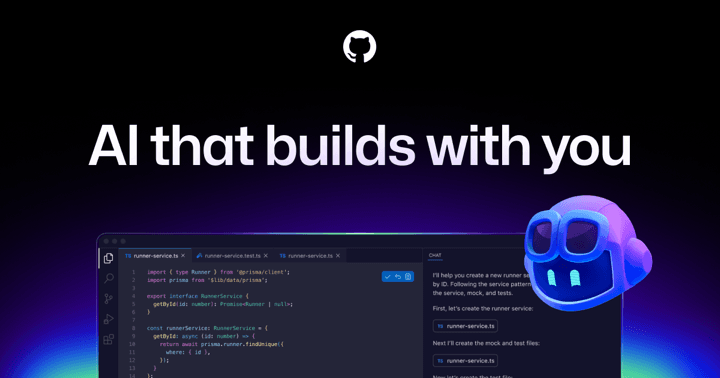 Free
FreeGitHub
GitHub Copilot
GitHub Copilot is an AI assistant that works inside your code editor. As you type, it suggests the next lines, and you can ask it questions without leaving your work.
Read more Free
FreeVercel
v0
v0 turns a written prompt into a front-end user interface. You describe a screen, and it produces React components you can copy straight into your own project.
Read moreFree ways to go from zero
3No prior coding needed. These are the on-ramps we point beginners to.
Coursera
Vibe Coding Essentials
This is a beginner specialization on Coursera, made by Scrimba, that teaches you to build real apps by working alongside AI coding tools. You bring the curiosity. You do not need any coding background to start.
Read more
Datawhale (open source)
Easy-Vibe: your first modern coding course
Easy-Vibe is a free, open-source course from Datawhale that walks you from a first idea all the way to a shipped AI app. It is open to everyone, and the whole curriculum is out in the open for anyone to read and improve.
Read more
Open source
Vibe Code Source
Vibe Code Source is a free, open-source library of copy-ready prompts paired with practical guides. Think of it as a shared toolbox you reach into when you are building with AI and want a proven starting point.
Read moreWhen you want to go deeper
3For when the vibes meet a real codebase and you want to understand what is happening.
Anthropic
Building effective agents
Anthropic published this guide in 2024 to answer a question many builders were quietly struggling with: when you put a language model in charge of doing real work, what is the simplest setup that actually holds up? Its core advice is calm and a little surprising. Most of the time, you do not need a fancy autonomous agent at all.
Read more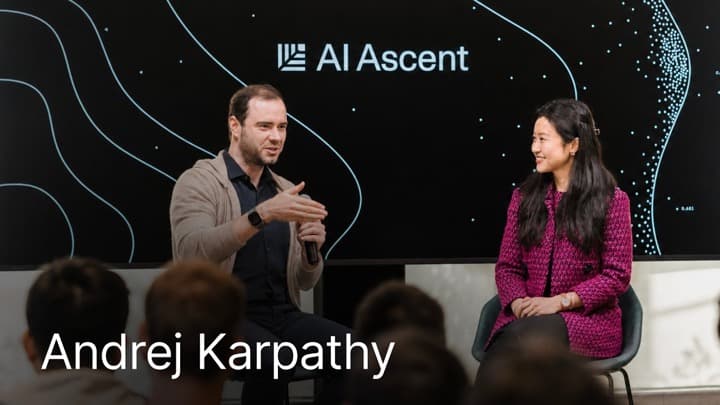
Andrej Karpathy
From vibe coding to agentic engineering
In this conversation with Sequoia and Stephanie Zhan, Andrej Karpathy describes how building software with AI is growing up. The playful, improvisational style he once called vibe coding is giving way to something more deliberate, where a person directs capable agents and stays responsible for the result.
Read morearXiv
Vibe coding, the academic version
In 2025, researchers Advait Sarkar and Ian Drosos published the first empirical study of vibe coding, the new habit of building software mostly by talking to an AI rather than writing code by hand. Instead of guessing how people do it, they watched them do it and listened to them think out loud.
Read moreBuild your own agents and skills
2Two hands-on courses by Akshat: one on AI agents, one on the skills that make them better.
Akshat Jain
Skill Factory
A skill is a small folder with a SKILL.md file that teaches an AI coding agent a habit once, so it applies it every time. This free course teaches you to write ones that actually get used.
Read moreAkshat Jain
Agent Factory
An agent is an AI that reasons, acts, and observes in a loop until it reaches a goal, not just a chatbot that answers one question. This free 23-module course teaches you to build real ones.
Read moreGo to the frontier
11Curated from Stanford's CS 153. The deep end, the papers that built modern AI.
From the guest lectures
5The work behind the people building the frontier: generative images, video, and voice.
Rombach, Blattmann et al.
High-Resolution Image Synthesis with Latent Diffusion Models
This 2022 paper is the one that put text-to-image generation in everyone's hands. It is the research behind Stable Diffusion, and its big idea was to make image generation cheap enough to run on a single ordinary graphics card.
Read moreBlattmann et al., Stability AI
Stable Video Diffusion
Released in 2023, this work takes the same recipe that made Stable Diffusion good at single images and stretches it across time, so the model produces short video clips instead of standalone frames.
Read more
Amit Jain
Luma AI
Luma AI is a company working on multimodal AI for video and 3D, led by Amit Jain. Its best-known product, Dream Machine, turns a prompt or an image into video, and the longer ambition is software that understands and simulates the physical world.
Read more
Mati Staniszewski
ElevenLabs
ElevenLabs is an AI audio company, co-founded by Mati Staniszewski, built around one focused mission: making synthetic speech sound genuinely human. Its tools cover natural text-to-speech, voice cloning, and real-time translation.
Read more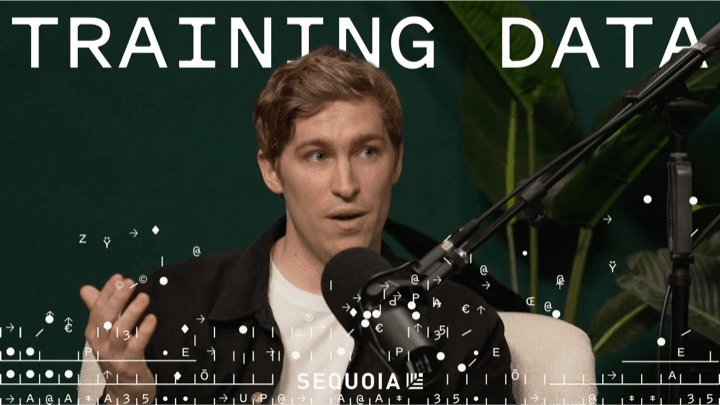
Sequoia · Training Data
Why voice will be the core interface
This is a 2025 podcast episode from Sequoia's Training Data series, featuring ElevenLabs CEO Mati Staniszewski. The conversation makes the case that voice is becoming a primary way we interact with computers, and that staying focused is how a company wins.
Read moreAI for everyone
2Why we run this for free and in the open. Cheap, safe access should not be a privilege.

Anthropic
Core Views on AI Safety
This is the 2023 piece where Anthropic lays out, in plain terms, why the company was founded and what keeps its researchers up at night. It is the closest thing to a mission statement for how to build powerful AI without getting burned by it.
Read moreRich Sutton
The Bitter Lesson
In this short 2019 essay, the reinforcement learning researcher Rich Sutton points to a pattern that keeps repeating across decades of AI. General methods that ride on raw computing power tend to win, and clever human-crafted shortcuts tend to lose.
Read moreOther places to learn in Oslo
3We are not the only room in town, and that is a good thing.

Meetup
Oslo AI
Oslo AI is a long-running meetup where people in and around the city gather to talk about artificial intelligence in plain, practical terms. It is run by volunteers, it costs nothing to join, and it is one of the bigger AI communities in Norway.
Read moreAI Tinkerers
AI Tinkerers Oslo
AI Tinkerers Oslo is the local branch of a worldwide network for people who like to build things with AI rather than just talk about them. Expect demo nights, hackathons, and a hands-on, roll-up-your-sleeves mood.
Read more
Meetup
Vibe Coding Collective
The Vibe Coding Collective is an international community built around relaxed, social coding sessions where people build with AI in good company. It is friendly to beginners and leans more toward easy company than intimidating expertise.
Read moreNew to this? Come build with us.
Reading is good. Building with people is better. Our drop-ins are free and open to total beginners.
RSVP for the next session